


India’s space agency, ISRO, has issued a cautionary advisory following a surge in solar activity, warning that intense solar flares could temporarily disrupt radio communications and satellite-based services over parts of the country.
The warning comes as scientists observe a highly active region on the Sun emitting powerful bursts of energy, including an X-class solar flare, the most intense category of such events.
What Triggered the Advisory
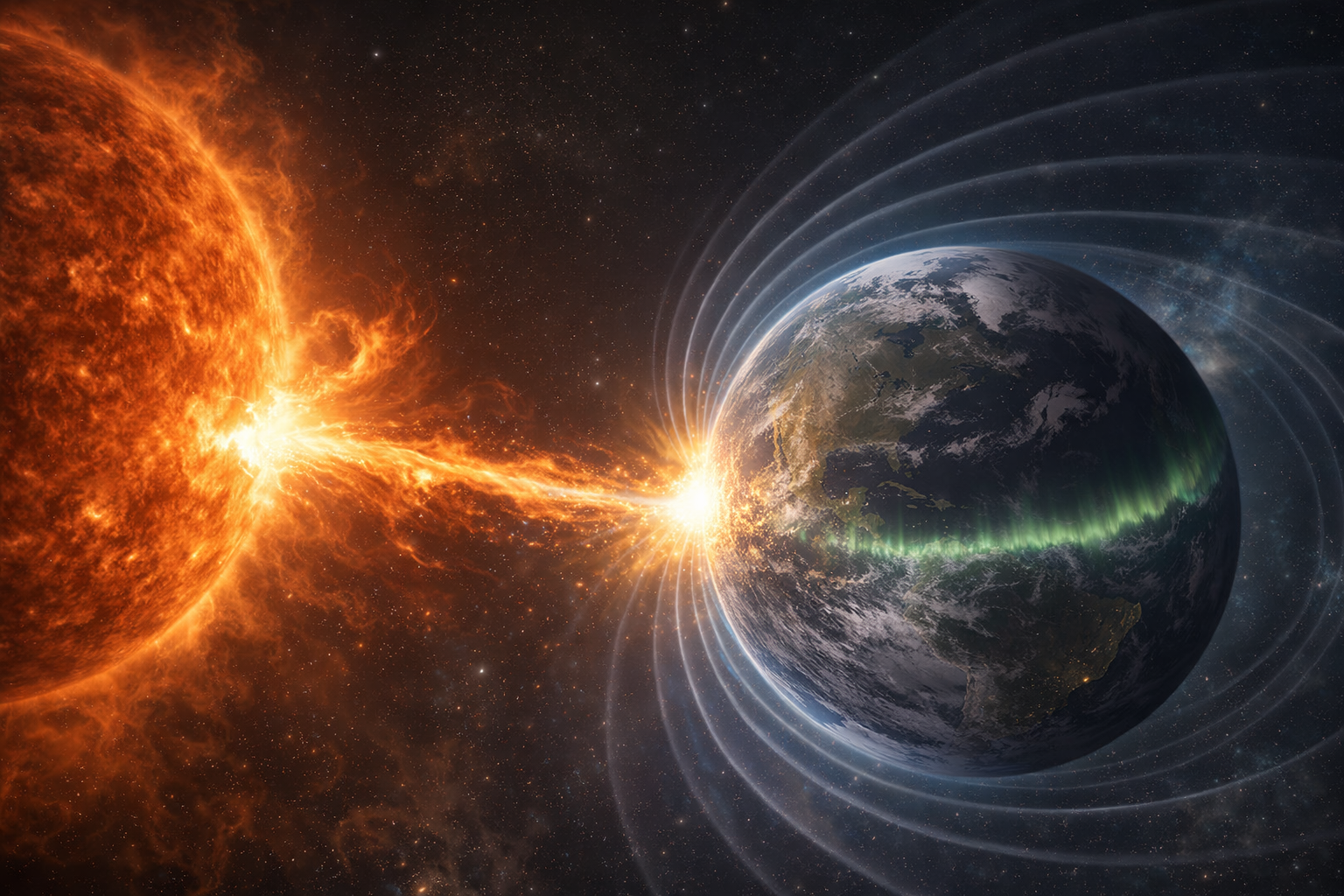
Solar monitoring agencies have detected repeated eruptions from an active sunspot region currently facing Earth. These eruptions release large amounts of electromagnetic radiation and charged particles that can reach Earth within minutes to hours, depending on their nature.
According to space scientists, the recent activity includes flares strong enough to increase the risk of radio blackouts, particularly affecting high-frequency communication systems.
Potential Impact on India
ISRO officials have indicated that the agency is closely monitoring the situation due to its potential impact on:
- Satellite communications
- Navigation and positioning signals
- Aviation and maritime radio systems
- Ground-based power infrastructure, in extreme cases
High-frequency radio signals are especially vulnerable, as solar radiation can disturb the ionosphere — the upper layer of Earth’s atmosphere that reflects and transmits radio waves.
Satellite Monitoring Underway
ISRO is currently tracking the performance of more than 50 operational Indian satellites as a precautionary measure. Engineers are assessing whether any spacecraft require protective adjustments to minimise exposure to heightened solar radiation.
Such measures are standard practice during periods of elevated solar activity and are intended to prevent long-term damage to sensitive onboard instruments.
Why Solar Activity Is Increasing
The Sun operates on an approximately 11-year solar cycle, moving between periods of relative calm and heightened activity. Scientists say the Sun is now approaching a phase known as solar maximum, during which sunspots, flares, and solar storms become more frequent.
During this phase, intense solar events are more likely to interact with Earth’s magnetic field, increasing the chances of atmospheric and technological disturbances.
No Cause for Public Alarm
While the advisory highlights potential risks, scientists stress that most solar storms do not result in serious disruptions on the ground. Earth’s magnetic field provides significant protection, and modern satellite systems are designed to withstand moderate space weather events.
ISRO has not indicated any immediate or large-scale disruption but has emphasised the need for vigilance as solar activity remains elevated.
A Visible Side Effect
Periods of strong solar activity can also produce vivid auroral displays, commonly known as northern lights. On rare occasions, these have been observed at lower latitudes, including parts of northern India, when solar storms are particularly intense.
ISRO is expected to continue issuing updates as the situation develops. Any significant escalation in solar activity or confirmed disruptions will be communicated through official channels.