

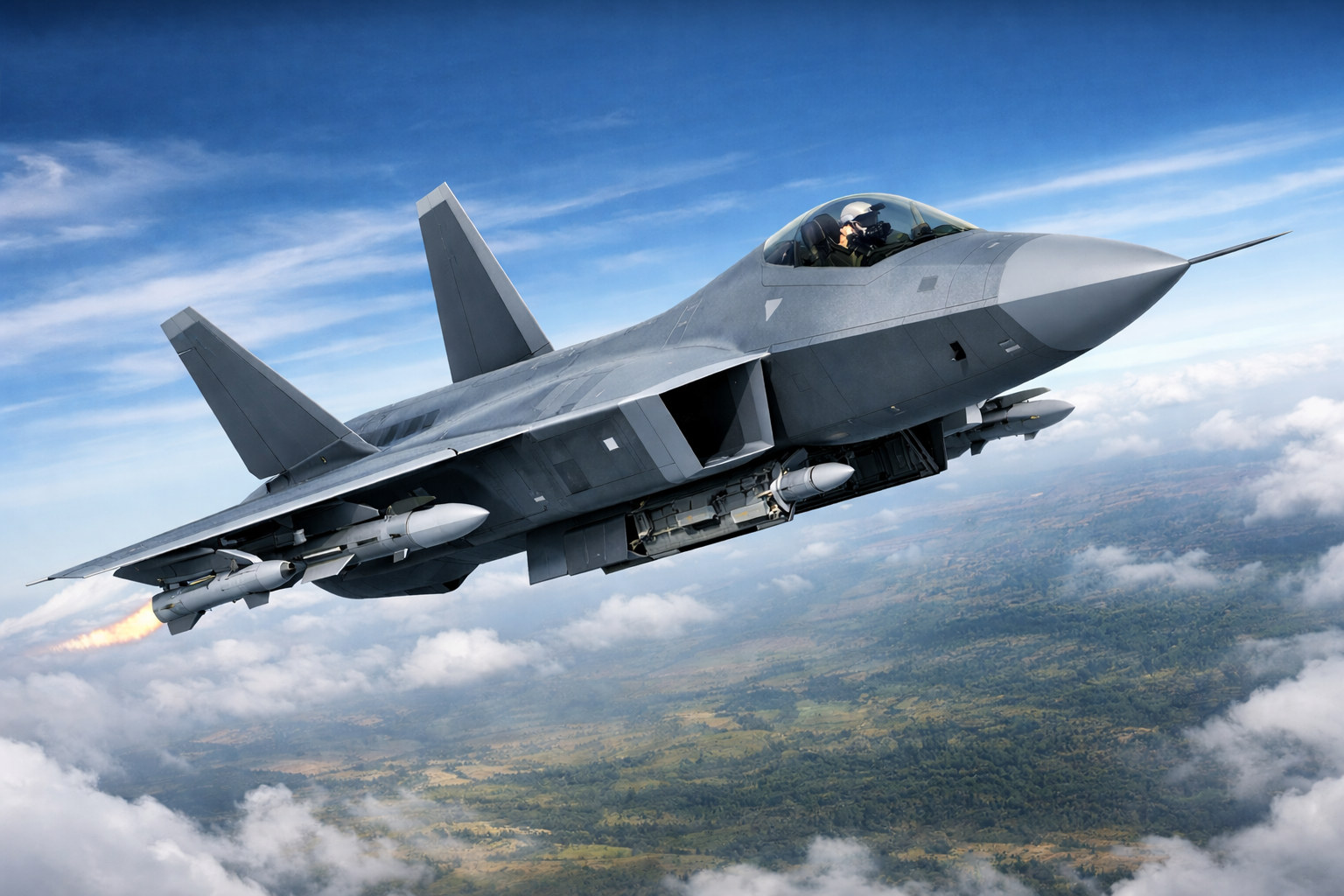

In a major shift in India’s defence manufacturing strategy, Hindustan Aeronautics Limited (HAL) has been excluded from the initial manufacturing phase of the country’s ambitious Advanced Medium Combat Aircraft (AMCA) programme — India’s planned fifth-generation stealth fighter jet.
Instead, the government has opened the programme to private-sector competition, marking the first time a frontline indigenous combat aircraft project will be led outside India’s long-dominant public-sector aerospace framework.
What Is the AMCA Programme?
The AMCA is India’s flagship effort to develop a fifth-generation stealth fighter designed to ensure long-term air superiority as older fleets such as the MiG-29, Mirage-2000 and Jaguar approach retirement.
Designed by the Aeronautical Development Agency (ADA) under the DRDO, the aircraft is expected to feature:
- Stealth shaping and internal weapons bays
- Supercruise capability
- Advanced sensors and network-centric warfare systems
- AI-assisted pilot workload management
The Indian Air Force (IAF) is the end user, with the programme seen as critical to counter China’s operational J-20 fighters and the upcoming J-35.
Why HAL Has Been Left Out — For Now
HAL has historically been the default integrator for India’s combat aircraft programmes, including the Su-30MKI and Tejas. However, officials say the AMCA represents a generational leap that requires faster timelines and stronger project discipline.
Under the newly approved model:
- The AMCA prototype contract (estimated at ₹15,000 crore) will be awarded through competitive bidding
- Firms with heavy existing order backlogs are ineligible
- The focus is on manufacturing efficiency, delivery timelines and cost competitiveness
HAL is currently handling multiple major programmes, including Tejas variants, Sukhoi upgrades, helicopters and trainers — a workload officials believe could risk delays similar to those seen in earlier projects.