

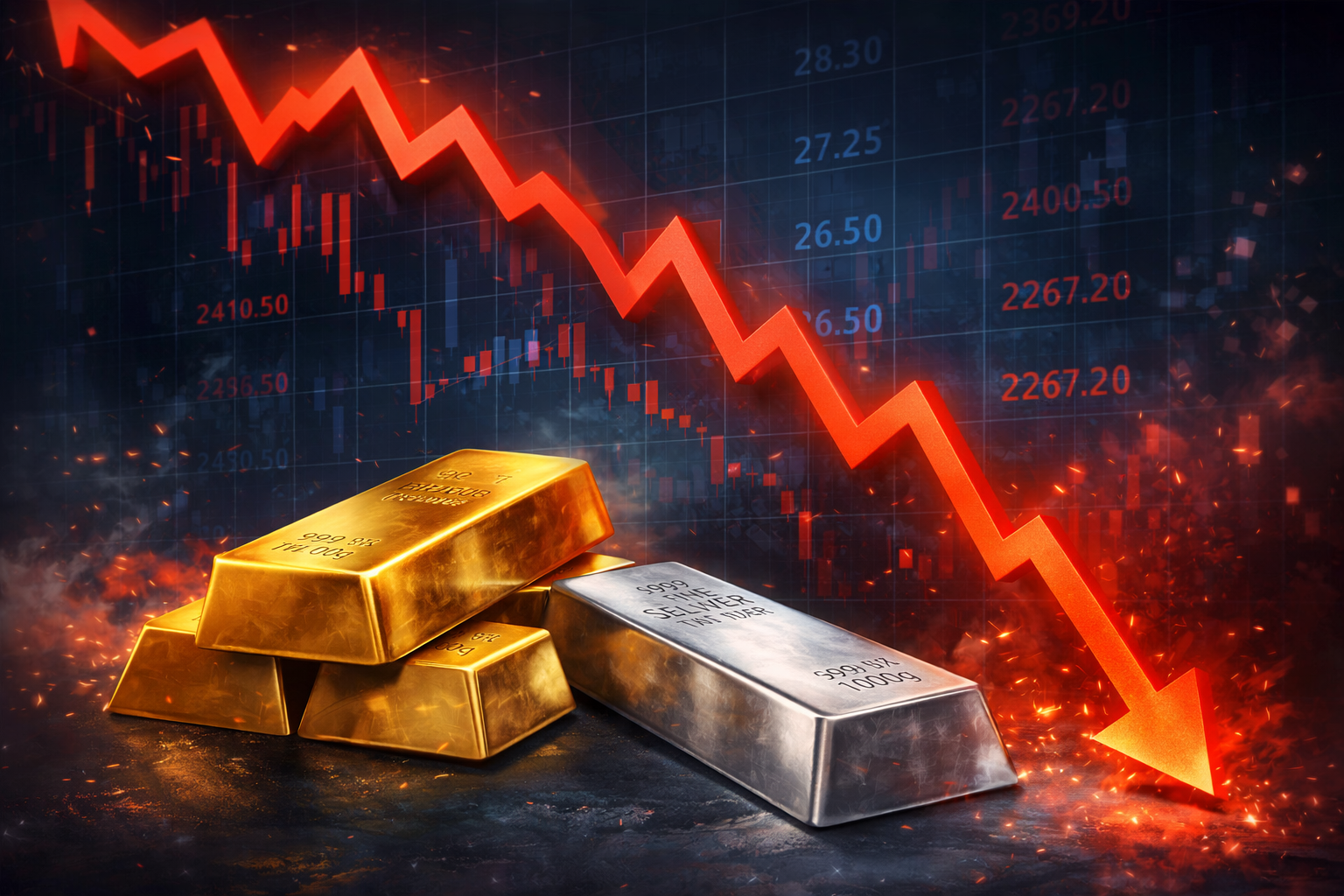

Global precious metals markets witnessed an extraordinary sell-off last week, with gold and silver prices swinging violently and an estimated $7 trillion erased across futures, ETFs, derivatives and spot markets, according to market analysts.
Silver, in particular, recorded one of the sharpest short-term collapses in its trading history, plunging nearly 40 per cent in just three sessions after touching record highs, sparking fresh debate over whether the rally had turned into a speculative bubble.
What Exactly Happened
After weeks of relentless gains, silver prices surged to unprecedented levels, drawing in a wave of retail and leveraged traders. That rally abruptly reversed last week as prices collapsed at a speed rarely seen in metals markets.
Gold also retreated sharply from multi-decade highs, posting its steepest decline since 2013, though the fall was far less severe than silver’s.
Market participants described the sell-off as sudden, disorderly and driven by forced liquidation, rather than a gradual reassessment of fundamentals.
Why Silver Fell Harder Than Gold
Analysts point to excessive speculation as the key difference.
Silver has increasingly behaved like a highly leveraged trading asset, rather than a traditional store of value. As prices rose rapidly over the past month, speculative participation surged, particularly in futures markets offering high leverage.
When prices began to fall, margin calls intensified. Traders were forced either to inject additional capital or exit positions — triggering a cascade of selling that accelerated the decline.
Gold, by contrast, remains more institutionally held and less exposed to short-term leveraged trading, cushioning its fall.
The Role of the Dollar and US Policy Signals
The sell-off also coincided with a strengthening US dollar, which tends to pressure dollar-priced commodities such as gold and silver.
Markets reacted to renewed expectations of tighter US monetary conditions, following signals that the next leadership phase at the US Federal Reserve could favour higher real interest rates than previously anticipated.
A stronger dollar makes precious metals more expensive for non-dollar buyers, reducing demand at the margin and amplifying downside pressure during periods of stress.
Bubble Burst or Market Reset?
Despite the scale of the decline, most global analysts are stopping short of calling it a bubble burst.
Instead, the consensus view is that markets are undergoing a violent unwinding of leverage, rather than a structural breakdown in demand.
Key fundamentals remain intact:
- Central banks continue to accumulate gold
- Geopolitical uncertainty remains elevated
- Precious metals still play a role in portfolio diversification
No major reversal has been observed in long-term investment or industrial demand.
What Happens Next
In the near term, volatility is expected to persist.
- Gold is likely to enter a sideways phase, fluctuating as markets digest higher interest-rate expectations and shifting currency dynamics.
- Silver remains more vulnerable, with analysts warning that speculative interest has not fully exited the market, keeping price swings elevated.
The recent crash has also coincided with turbulence across other asset classes, including cryptocurrencies and selected commodities, suggesting a broader global re-pricing of risk assets.
The Bigger Picture
The dramatic move in precious metals underscores how quickly crowded trades can unravel when leverage builds up across markets. While the long-term case for gold and silver remains debated, last week’s sell-off serves as a reminder that even “safe-haven” assets are not immune to sudden and severe corrections.
For now, markets appear to be searching for a new equilibrium — one shaped less by speculation and more by fundamentals.