

By using this site, you agree to the Privacy Policy and Terms of Use.
Accept
orbitalnewsnetwork.com
  • Home
    • Home 2New
    • Home 3
    • Home 4
    • Home 5
  • World
    World

    India–US Trade: A Tariff Adjustment, Not a Strategic Breakthrough

    By ONN
    4 Min Read
    The Same War, Two Stories
    World

    The Same War, Two Stories

    By ONN
    February 2, 2026
    Technology

    12 Reasons Why Having a Pet Is Good for You and Your Family

    By ONN
    October 1, 2021
  • Technology
    The Same War, Two Stories
    World

    The Same War, Two Stories

    Spend enough time following global politics and a pattern begins to surface.…

    By ONN
    5 Min Read
    Technology
    12 Reasons Why Having a Pet Is Good for You and Your Family
    HealthThe Escapist
    The Best Islands for Beaches, From Aruba to the Baltics
    The Escapist
    9 Awesome Destinations for Solo Female Travelers
    Insider
    How Fashion Insiders Are Dressing for New York Fashion Week
  • Insider
  • Pages
    • Blog Index
    • Contact US
    • Search Page
    • 404 Page
    • Customize Interests
  • My Bookmarks
Reading: The Same War, Two Stories
Sign In
  • Join US
orbitalnewsnetwork.comorbitalnewsnetwork.com
Font ResizerAa
  • Bussiness
  • The Escapist
  • Entertainment
  • Science
  • Technology
  • Insider
Search
  • Home
    • Home 1
    • Home 2
    • Home 3
    • Home 4
    • Home 5
  • Categories
    • Technology
    • Entertainment
    • The Escapist
    • Insider
    • Bussiness
    • Science
    • Health
  • Bookmarks
    • Customize Interests
    • My Bookmarks
  • More Foxiz
    • Blog Index
    • Sitemap
Have an existing account? Sign In
Follow US
© Foxiz News Network. Ruby Design Company. All Rights Reserved.
The Same War, Two Stories
World

The Same War, Two Stories

ONN
Last updated: February 2, 2026 10:18 am
By ONN
5 Min Read
Share
SHARE

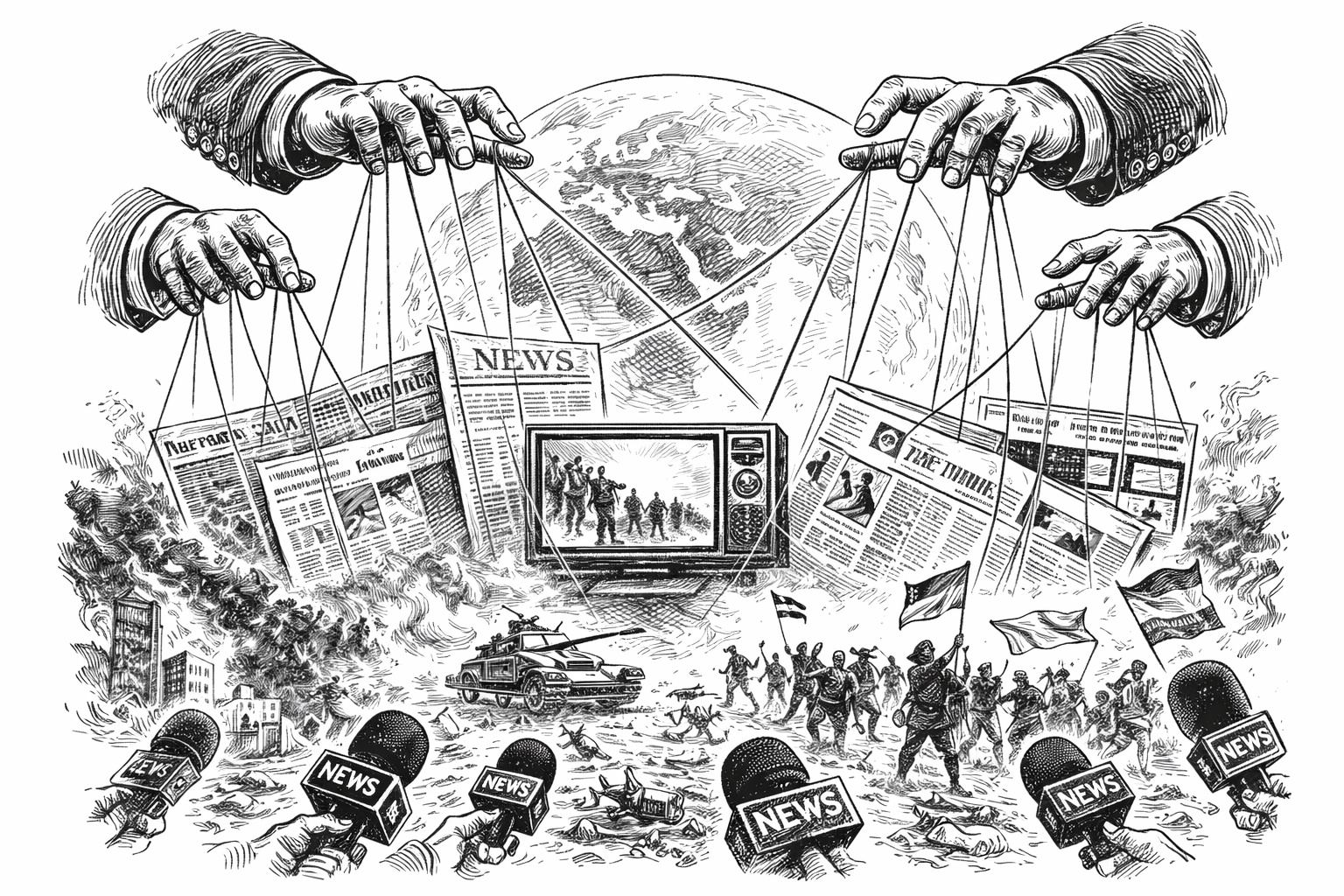
Spend enough time following global politics and a pattern begins to surface. The same event — a missile strike, a border skirmish, a diplomatic walkout — appears in the news, yet the meaning of what you have just read depends less on the facts than on where you encountered them. One version frames the act as deterrence, another as provocation, a third as tragic inevitability. None of these accounts is entirely false. But none is complete either. What differs is not reality itself, but the lens through which it is presented, and over time that lens becomes more influential than the event it claims to describe.

Modern media bias rarely announces itself. It does not resemble propaganda posters or overt slogans. Instead, it operates through framing decisions that appear technical and defensible: where the story begins, which historical reference point is treated as relevant, whether an action is described as escalation or response, whether agency is named directly or diffused into abstract phrasing. A civilian “is killed” in one report; civilians “die” in another. A strike is “retaliatory” here, “unprovoked” there. These are not grammatical quirks. They are narrative choices, and they quietly instruct the reader on how to feel before the reader realises a judgement is being formed.

Consider how the same conflict can be portrayed as a struggle for security in one part of the world and as aggression in another, depending on the political alignment of the actors involved. Consider how sanctions are framed as moral instruments when imposed by some states and as economic warfare when imposed by others. Or how civilian suffering becomes a rallying cry in one theatre and a regrettable side note in another. These inconsistencies are often explained away as differences in editorial culture or audience expectations, but beneath them lies a simpler logic: interests shape attention, and attention shapes morality.

This is why the old principle of international relations continues to hold its ground: there are no permanent friends, only permanent interests. Governments acknowledge this openly. Media ecosystems, particularly global ones, reflect it more subtly. Access to officials, reliance on sources, national perspective, and the assumptions of a primary audience all exert pressure on how stories are framed. Hypocrisy, in this context, is not a deviation from the system. It is a predictable outcome of it. The same behaviour can be condemned, contextualised, or ignored altogether depending on who benefits from which interpretation.

Outrage, too, follows patterns. Some humanitarian crises dominate the news cycle for weeks, accompanied by panels, think pieces, and moral urgency. Others, no less severe, pass with minimal attention. The difference is rarely scale alone. It is strategic relevance. It is narrative convenience. It is whether the suffering fits cleanly into an existing story that audiences already understand. This does not make the suffering less real. It determines whether it will be remembered, debated, or quietly archived.

For readers who notice these patterns, the news begins to feel less like a record of events and more like a map of incentives. The question shifts from “what happened?” to “why is this being framed this way, now?” That shift is uncomfortable, because it removes the clarity of simple moral positioning. It forces the reader to sit with ambiguity, to acknowledge that multiple truths can coexist, and that empathy and analysis do not always point in the same direction.

Geopolitics, stripped of its language, is not a contest of good versus evil. It is a system — repetitive, interest-driven, constrained by power and consequence. Understanding that system does not make it humane. But it makes it intelligible. And in a world where narratives often arrive fully formed before facts have settled, the ability to recognise how stories are constructed becomes as important as the stories themselves.


Key Trends Developing in Global Equity Markets
White House Reminds Lawmakers not to Travel to Afghanistan
India–US Trade: A Tariff Adjustment, Not a Strategic Breakthrough
Global Warming Is Changing How Hurricanes Work
The States Braces for Protests Over New COVID Rules
Share This Article
Facebook Email Copy Link Print
Leave a Comment

Leave a Reply Cancel reply

Your email address will not be published. Required fields are marked *

More Popular from Foxiz

Technology

Sony WF-10XM4: Headphones Are Our Absolute Favorite

Sponsored by
Tech Bird

9 Awesome Destinations for Solo Female Travelers

By ONN
World

The States Braces for Protests Over New COVID Rules

By ONN
5 Min Read
- Advertisement -
Ad image
HealthThe Escapist

The Best Islands for Beaches, From Aruba to the Baltics

And then there is the most dangerous risk of all, the risk of spending your life…

9.6 out of 10Good Place
World

Explained: How the President of US is Elected

Politics is the art of looking for trouble, finding it everywhere, diagnosing it incorrectly and applying…

By ONN
World

Coronavirus Resurgence Could Cause Major Problems for Soldiers Spring

Politics is the art of looking for trouble, finding it everywhere, diagnosing it incorrectly and applying…

By ONN
World

One Day Noticed, Politicians Wary Resignation Timetable

Politics is the art of looking for trouble, finding it everywhere, diagnosing it incorrectly and applying…

By ONN
Bussiness

These are The Countries Where Crypto is Restricted or Illegal

The real test is not whether you avoid this failure, because you won’t. It’s whether you…

By ONN
orbitalnewsnetwork.com
We influence 20 million users and is the number one business and technology news network on the planet. Foxiz Daily delivers everything you need to know to live your best life, best tech trend, traveling passion and more…

Categories

  • The Escapist
  • Entertainment
  • Bussiness

Quick Links

  • Advertise with us
  • Newsletters
  • Complaint
  • Deal

u00a9 Foxiz News Network. Ruby Design Company. All Rights Reserved.

Welcome Back!

Sign in to your account

Username or Email Address
Password

Lost your password?