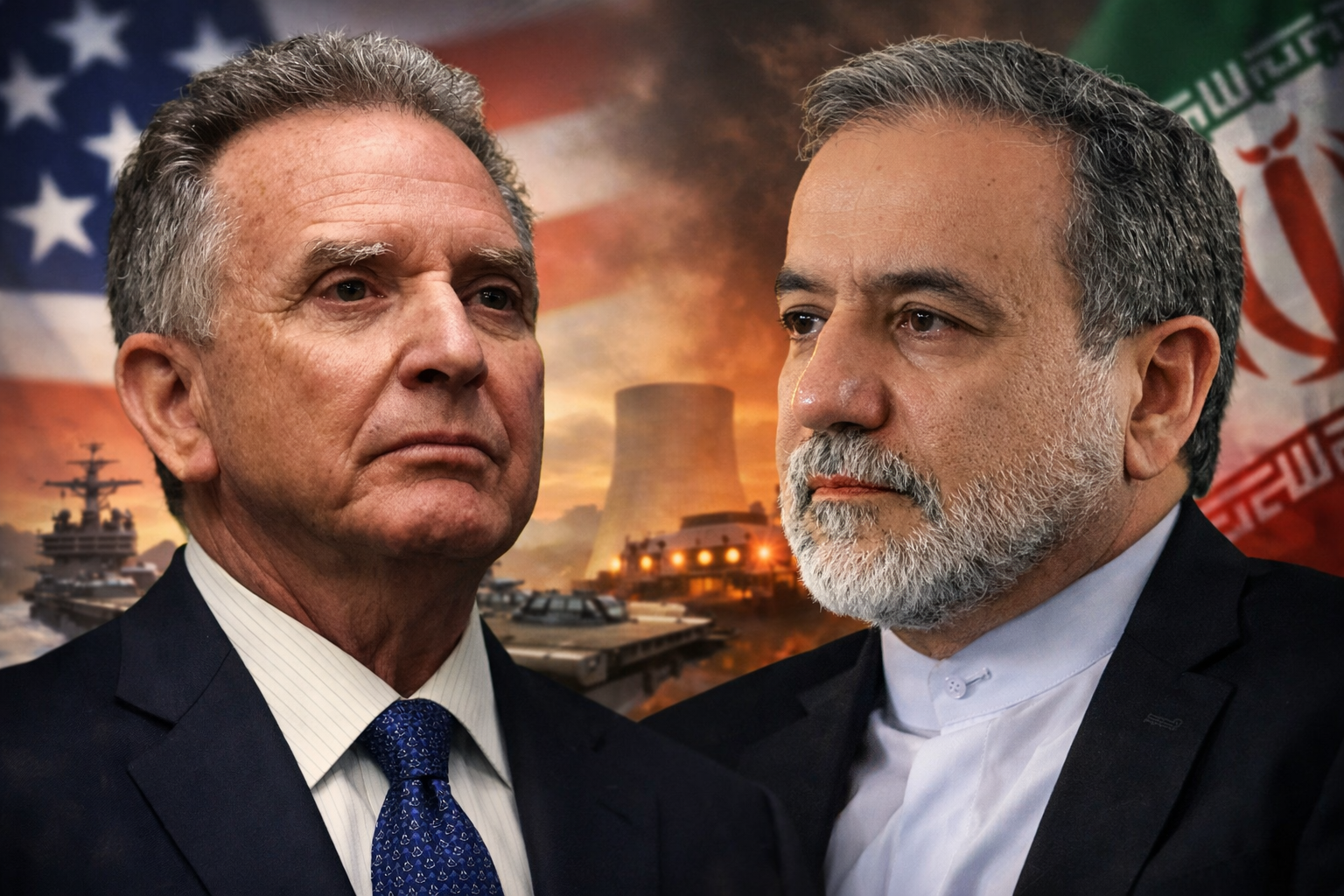

Senior officials from the United States and Iran are expected to meet in Oman for direct talks amid escalating tensions that have revived fears of a military confrontation between the two long-time adversaries.
The discussions come against the backdrop of a significant US military build-up in the Middle East and weeks of sharp rhetoric from Washington, including warnings of air strikes if diplomacy fails.
A Narrow Diplomatic Window
The talks are being organised with the help of regional mediators seeking to de-escalate a crisis that has intensified since Iran’s violent suppression of nationwide protests last month. Human rights groups estimate thousands may have been killed, with tens of thousands arrested.
Uncertainty over the scope, participants and venue of the meeting had threatened to derail the talks entirely. Iran’s last-minute request to move the meeting from Istanbul to Oman — and to limit it strictly to Iranian and American officials — underscores how fragile the process remains.
Deep Divisions on the Agenda
Washington has said it wants discussions to go beyond Iran’s nuclear programme, pressing Tehran to:
- Freeze uranium enrichment
- Dispose of its stockpile of highly enriched uranium
- Address its ballistic missile programme
- Reduce support for regional armed groups
Iran, however, has made clear it will only discuss nuclear issues, rejecting broader demands as violations of its sovereignty.
Iran maintains that its nuclear programme is peaceful and insists it has the right to enrich uranium domestically. It has also ruled out transferring its estimated 400kg of highly enriched uranium abroad.
Military Pressure and Stark Warnings
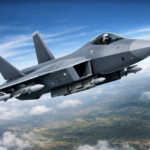
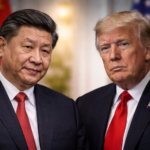
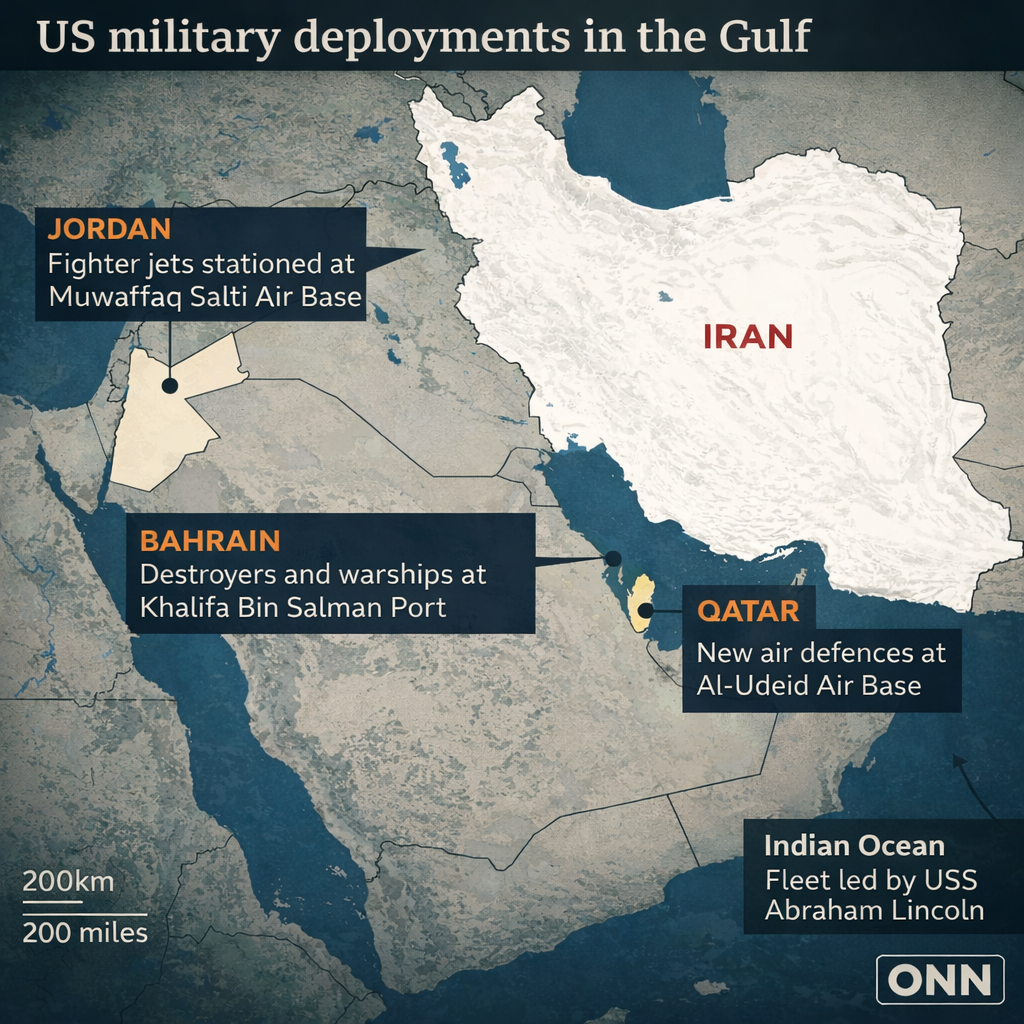
US President Donald Trump has repeatedly warned that Iran could face military action if talks fail. The US has deployed thousands of additional troops, warships, fighter jets and an aircraft carrier to the region — a show of force Trump has described as an “armada.”
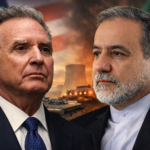
Iran has responded with its own warnings, vowing to strike US military assets and Israel if attacked. Iranian Foreign Minister Abbas Araghchi, who will lead Tehran’s delegation, recently said Iran’s armed forces were “with their fingers on the trigger.”
The US side will be represented by special envoy Steve Witkoff, along with Trump’s son-in-law Jared Kushner.
Sanctions, Stability and Survival
For Iran’s leadership, analysts say the talks may represent a last opportunity to avert US military action at a moment of internal weakness unseen since the 1979 Islamic Revolution. Tehran is expected to push hard for sanctions relief, arguing that economic pressure has crippled the country.
Critics of Iran’s clerical establishment warn that easing sanctions could offer the regime a vital lifeline just as domestic opposition has intensified.
Why Oman Matters
Oman has quietly served as a trusted intermediary between Washington and Tehran in the past, hosting discreet negotiations during previous crises. Its role again highlights regional fears that a US-Iran conflict could spiral into a wider war and destabilise the Middle East.
Regional governments have cautioned that air power alone would be unlikely to topple Iran’s leadership and could instead trigger prolonged chaos.
What Comes Next
Officials on both sides have tempered expectations, describing the meeting as exploratory rather than decisive. Even a limited framework for future negotiations would be seen as progress.
Failure, however, could accelerate a slide toward confrontation — a scenario that diplomats across the region are urgently trying to avoid.